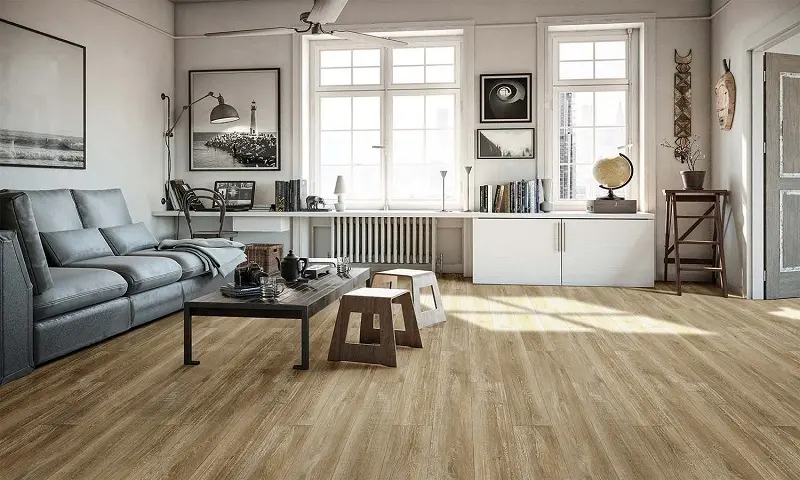
One of the most popular flooring options for modern-day homes is vinyl flooring. It is ideal for residential as well as commercial spaces. This flooring is the best solution for contemporary homes due to its longevity. Also, it adds aesthetic value to your space while maintaining durability. It perfectly mimics the look of real wood and stone, just like wooden flooring. But the question raised is, is vinyl flooring good for a modern home or not? To answer this question, let’s look at the vinyl flooring pros and consbelow.
What Is Vinyl Flooring
If you are wondering what vinyl flooring is? Then, in this blog, you will find the answer. It is a highly resilient flooring option made of synthetic materials, such as PVC and chemicals, that perfectly mimic the natural texture of wood. It is available in tiles, planks, and sheets to accommodate your bathroom and kitchen areas. To learn more, take a closer look at the construction of vinyl flooring below.
Vinyl Flooring Material Explained
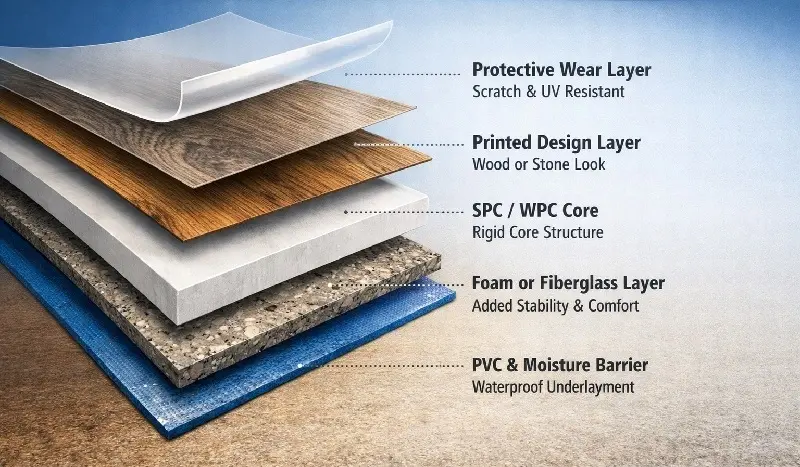
To answer the question of how durable is vinyl flooring? Let’s take a closer look at its material and composition. Its composition consists of plasticizers and fillers to provide a base for the flooring. PVC adds strength and prevents scratches and dents. While stabilizers, such as calcium-zinc, protect it from UV rays. In addition, a protective Polyurethane layer prevents scratches. It is almost 40 mm thick, thus well-suited for high-traffic spaces. Its core consists of SPC and WPC, which keep the flooring rigid and provide underfoot comfort. Underlayment is made from foam and fiberglass, with PVC to keep the surface moisture-free.
Types Of Vinyl Flooring
This flooring basically comes in three types. One is LVT, the other is LVP, and the last is sheet flooring. Specifications for all these flooring varieties are listed below.
-
Sheet Vinyl Flooring
These waterproof sheets are perfect for laundry rooms and commercial kitchens. They are available in a 12-foot roll to accommodate the large living spaces.
-
Luxury Vinyl Plank Flooring
These vertical planks mimic the wooden flooring. They are extremely durable, making them ideal for high-traffic areas such as hotels and retail stores.
-
Luxury Vinyl Tile Flooring
These tiles mimic ceramic and stone textures and fit in bathrooms and kitchens to give a luxurious look.
Pros Of Vinyl Flooring
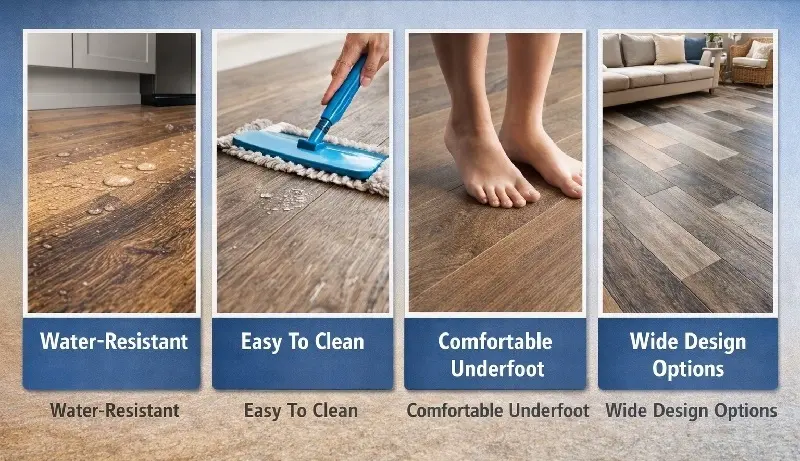
There are several benefits of vinyl flooring, listed below for our readers’ convenience.
1. Water-Resistant
For moist spaces such as your kitchen and basement, this waterproof flooring is an ideal option. It prevents dampness and mildew growth beneath the flooring sheet.
2. Easy To Clean And Maintain
It is one of the most convenient floorings as it is easy to maintain. You need to vacuum and mop regularly for its upkeep.
3. Comfortable Underfoot & Noise Insulation
Due to multiple layers, there is no noise from walking, hence providing quite a space to live in. Its soft, cushioned backing provides a comfy base for your feet.
4. Wide Design And Style Options
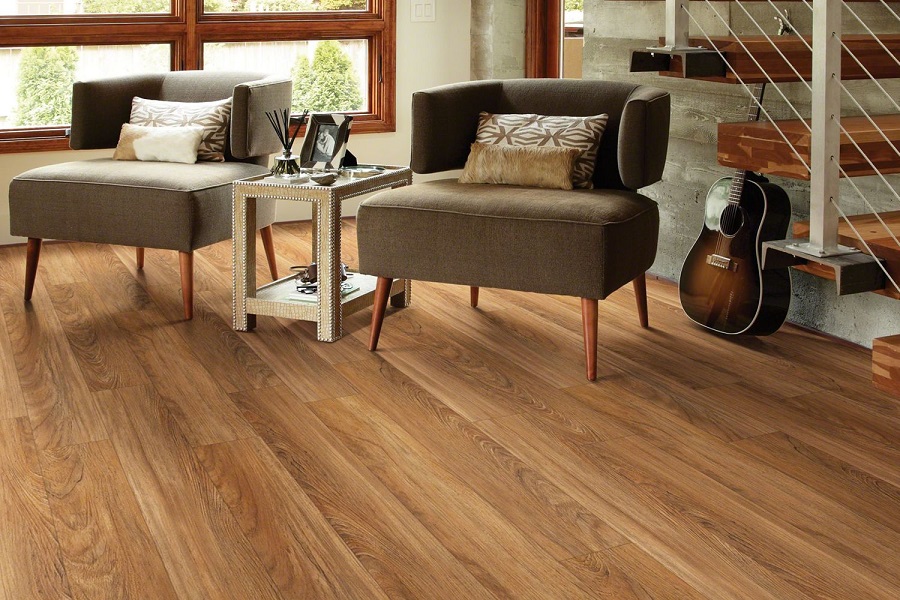
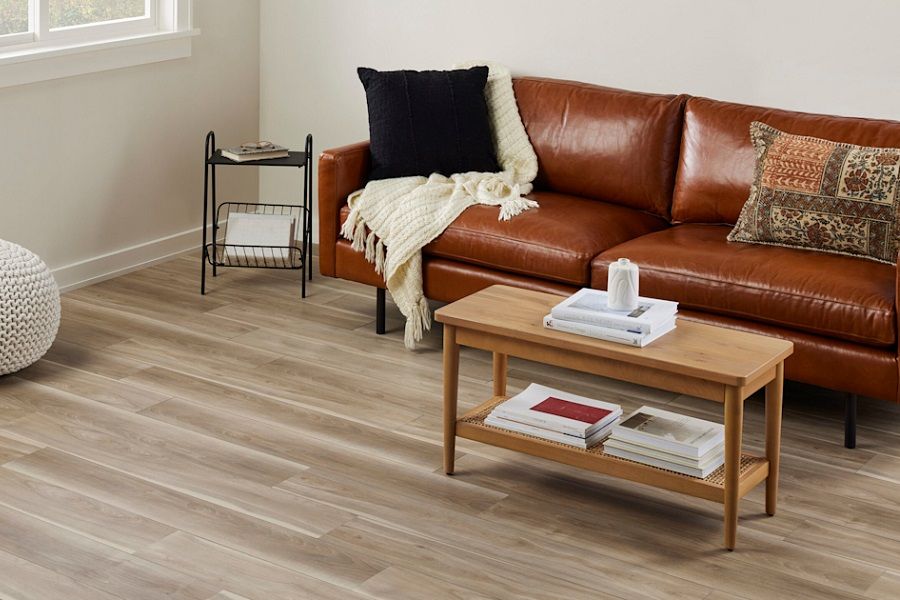
These vinyl tiles are available in versatile designs, such as wood and stone, to add depth to the floor. Also, its vibrant and earthy color and wooden texture give the flooring a natural look.
5. Budget-Friendly
Vinyl is easy to maintain compared to hardwood, which is why it saves you maintenance costs. It is made from sustainable and budget-friendly materials for every customer.
6. Fast And Simple Installation
The click-lock tile installation method provides ease for homeowners. Also, there is no need to hire professionals for installation, as vinyl planks can be fitted easily using DIY methods.
Cons Of Vinyl Flooring
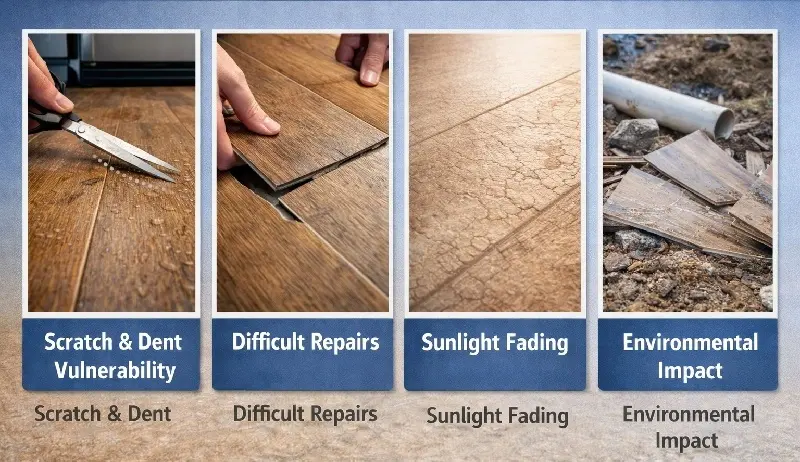
Although vinyl flooring is preferred due to its extreme durability and highly resistant surface. But there are several disadvantages of vinyl plank flooring, as outlined below.
1. Scratch And Dent Vulnerability
Sharp objects such as knives and scissors can damage the flooring surface. Also, home appliances and heavy furniture cause dents in vinyl planks.
2. Difficult Repairs
In case of a plank damage, you need to replace the whole plank. As damages cannot be covered by repairing. Patching the vinyl sheet creates a visible look and allows water to pass through it.
3. Sunlight Fading Over Time
Long term exposure of flooring to sunlight can discolor the tiles. It can create brittleness over the planks, just like a cracked look.
4. Environmental Consideration
Vinyl material is non-biodegradable and stays in the land without decomposition. Due to the complex structure of this flooring, it became difficult to recycle it.
5. Lower Perceived Property Value
LVT flooring has a lower ROI and property value than hardwood. As a natural flooring material, it lasts longer and provides a finished look.
Vinyl Flooring For Different Spaces
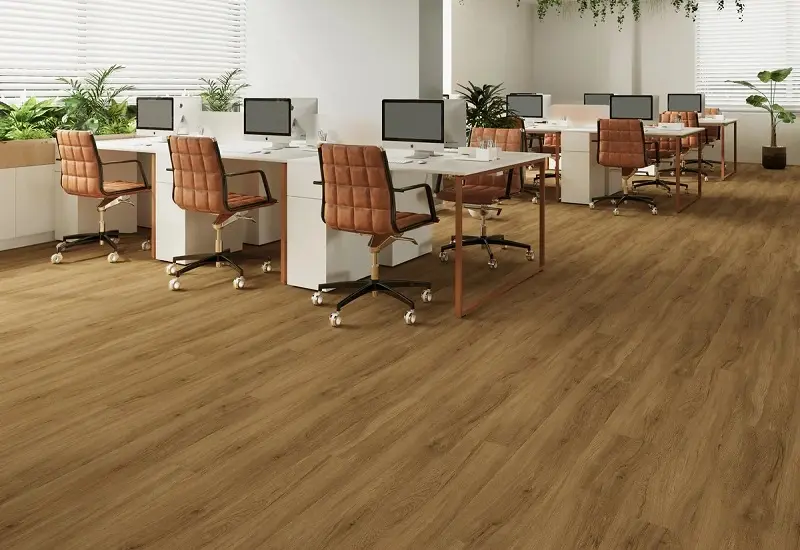
Vinyl flooring is versatile and accommodates every space. Here are the commercial and residential uses of vinyl tiles and planks.
1. Vinyl Flooring For Homes
Stylish and cushioned vinyl tiles provide underfoot comfort in your bedroom and living room. Also, these moisture-proof planks are ideal for installing in your kitchen.
2. Vinyl Flooring For Bathrooms And Wet Areas
Vinyl sheet is 100% moisture-free, which is why it’s perfect for bathrooms and kitchens. It protects the flooring base from water seeping. Also, offer perfect foot traction in water-prone areas.
3. Vinyl Flooring For Offices And Commercial Areas
These highly resilient vinyl tiles and sheets are a good fit for corporate spaces. Due to the strong wear layer, there is no chance of foot scratches.
Vinyl Flooring Vs Other Flooring Types
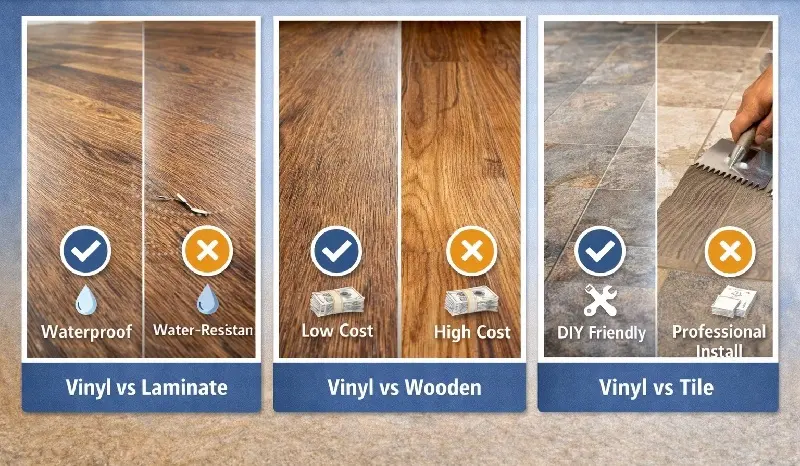
You can look at a brief comparison of vinyl with other flooring types to assess the functionality.
1. Vinyl Flooring vs Laminate Flooring
There is a clear difference: vinyl is waterproof, while laminate flooring is water-resistant. Also, vinyl is much more durable than laminate and offers warmth underfoot.
2. Vinyl Flooring Vs. Wooden Flooring
There is a lower maintenance cost for vinyl compared to wood. Vinyl installation is affordable, while wooden flooring is expensive.
3. Vinyl Flooring Vs. Tile Flooring
Laminate requires professional installation, while vinyl plank can be installed DIY. Vinyl has a texture that supports the feet better than wood.
Who Should Choose Vinyl Flooring
Due to excellent durability and wear resistance, it prevent pet to scratch the floor. That is why best for houses with pets and kids. There is no worry of pet muddy paws as these vinyl tiles can be cleaned in no time. Renters can utilize these vinyl sheets to avoid maintenance and installation costs. With peel-and-stick methods and a click-lock system, you can easily fit the tiles. Moreover, vinyl flooring is ideal for restaurant and laundry owners. Also, hotel owners and homeowners can avail themselves of these floors.
When Vinyl Flooring May Not Be Ideal
In most luxurious spaces, these vinyl tiles look cheaper than natural wood flooring. These floors can expand drastically in the high heat of Dubai. Thus, not good for outdoor spaces.
Final Thought
The final verdict is that vinyl is the most popular flooring option, offering long-term results. It is budget-friendly for renters and apartment owners. Also, they have high-performance flooring that adds aesthetics to your space. Its superior durability can withstand extreme foot traffic without scarring. Pet owners can install vinyl tiles without fear of scratching. It idea for moisture-prone areas like laundry rooms and kitchens. As it is not a sustainable flooring treatment that is why comproise on eco-sustainability.
Unlike wooden flooring, it cannot provide a natural texture that adds value to the property. Its return on investment and resale value are lower than those of hardwood flooring. But it is a practical solution that meets the retail requirements and residential needs as well. Clear up any confusion and purchase your favourite vinyl flooring type to install in your space.